5G Router Connectivity wherever &
whenever
you need it… !
Bonded 4G/5G Router products,
Bonded ADSL and FTTC services
&
Leased line services for all your connectivity requirements.
Read more4G/5G Fixed IP SIM Cards
Offering a high speed 4G/5G connection with a static, public IP address.
Read morePrivate 4G/5G Local cellular network.
A local cellular network independent of the public Mobile Network Operators
Read more
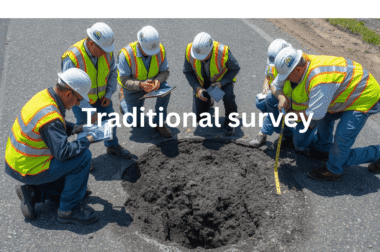
The UK road network is at a turning point. Traditional surveying is slow and inconsistent, public frustration is rising, and councils face overwhelming backlogs. AI presents the most promising solution for improving road health at scale.
How AI Is Already Transforming Highway Networks
Local government pilots demonstrate:
Autonomous robots detecting micro-cracks invisible to humans
AI predicting potholes before they appear
Computer vision syste
Contractors play a critical role in repairing and maintaining UK roads. But as councils demand more transparent, evidence-backed maintenance, AI tools are becoming essential to winning contracts and delivering efficient results.
With major contractors like Costain and Kier already mentoring AI‑driven innovation trials, the industry is rapidly moving toward data‑driven roadworks.
Why Contractors Need AI Tools
Contractors face increasing requirements to
With public dissatisfaction rising and budgets tightening, traditional methods simply cannot keep pace with the growing maintenance demands.
Government‑funded projects and new Innovate UK initiatives have accelerated the adoption of AI across local authorities.
AI in Highways Management
Road AI can be used to:
Detect potholes before they form
Identify small defects invisible to human inspectors
Analyse road conditions with improved accuracy
Local councils are responsible for 98% of the UK’s road network, but years of rising traffic, extreme weather, and underinvestment have created a highways crisis. With the maintenance backlog now exceeding £17 billion, councils are trapped in a cycle of expensive reactive repairs instead of long‑term preventative work.
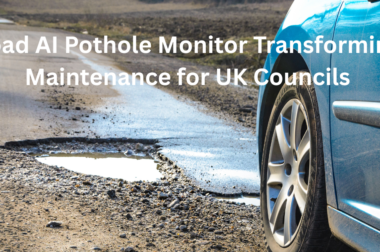
AI technologies like EMS’s Road AI Pothole Monitor offer a path forward by improving detection, enabling early intervention, and reducin...
Potholes have become one of the biggest frustrations for UK road users, causing breakdowns, insurance claims, congestion, and rising maintenance costs. Councils face pressure to maintain thousands of miles of ageing roads with limited budgets — but traditional surveying and reactive repairs simply can’t keep up.
That’s why EMS has developed the Road AI Pothole Monitor, a next‑generation AI system designed to help councils identify potholes earlier, repa...
Live streaming has become a core requirement for modern events, productions and mobile operations. Whether you’re broadcasting from a festival field, a stadium, a corporate event, a pop‑up activation, or a remote location, audiences expect high‑definition, uninterrupted, low‑latency video — and they won’t tolerate buffering, pixelation or stream drops.
But traditional connectivity solutions regularly fail under real‑world conditions:
Cellular netwo...
Fleet operators today rely on constant connectivity. Whether managing delivery vans, service vehicles, emergency units, mobile broadcast trucks or logistics fleets, real‑time data is now essential to safe, efficient, and coordinated operations. But keeping moving assets online is one of the hardest connectivity challenges — vehicles travel through patchy 4G/5G coverage, congested cells, rural dead zones and unpredictable mobile network conditions.
This ...
Modern businesses depend on fast, secure and resilient connectivity — often across multiple locations, remote teams, temporary sites or mobile units. As cloud adoption grows and applications become more bandwidth‑intensive, traditional networking models such as MPLS or single‑WAN routers can no longer keep up.
This has led to the rise of SD‑WAN (Software‑Defined Wide Area Networking) — a smarter, cloud‑managed way of connecting sites. When combined with...
In a world where businesses, events, and critical operations depend on uninterrupted online access, traditional single‑network connectivity is no longer enough. Whether it's a live event, a remote office, a construction site, a broadcast unit, or emergency response deployment, organisations now need high‑performance, fault‑tolerant internet that continues working even when individual networks fail.
This is where multi‑network bonding comes in — the tech...
1. Rapid Deployment — Connectivity in Minutes
Bonded routers deliver instant connectivity without waiting for a fibre install — a major advantage cited in multiple temporary internet solutions.
2. Ultra‑Reliable Performance With Seamless Failover
Bonded systems eliminate single‑network failures. When one network drops, another picks up instantly with no session loss — essential for payments, ticket scanning, streaming and security feeds.
3. Scalable fo...