Construction sites are among the most challenging environments for connectivity.
They are:
Temporary by nature
Constantly changing
Often located in areas with limited infrastructure
Yet they now depend on reliable, always-on connectivity to support everything from site operations and security to IoT monitoring and digital reporting.
The problem is that traditional connectivity approaches—fixed-line broadband or ad hoc mobile setups—ofte...
As organisations scale across multiple sites and deploy increasingly connected systems—from CCTV and IoT devices to smart building platforms—connectivity is no longer a simple utility.
It has become mission-critical infrastructure.
For many businesses, managing this complexity internally is no longer practical. As a result, the shift toward managed connectivity providers is accelerating.
But not all providers deliver the same level of capability.
...
Choosing the right connectivity solution is no longer straightforward. As businesses expand across multiple sites and deploy CCTV, IoT devices, and smart building systems, the demands on networks have fundamentally changed.
Traditional broadband is no longer always sufficient. At the same time, newer options such as fixed IP mobile connectivity and satellite solutions like Starlink are becoming viable alternatives.
So how do you decide?
In this gu...
Buildings are no longer static environments—they are dynamic, data-driven systems.
Over the last decade, Building Management Systems (BMS) have formed the backbone of building operations, controlling HVAC, lighting, and other core functions. But in 2026, this is no longer enough.
The shift toward digital twins, real-time analytics, and ESG-driven performance is transforming how buildings are managed. At the centre of this transformation is one critic...
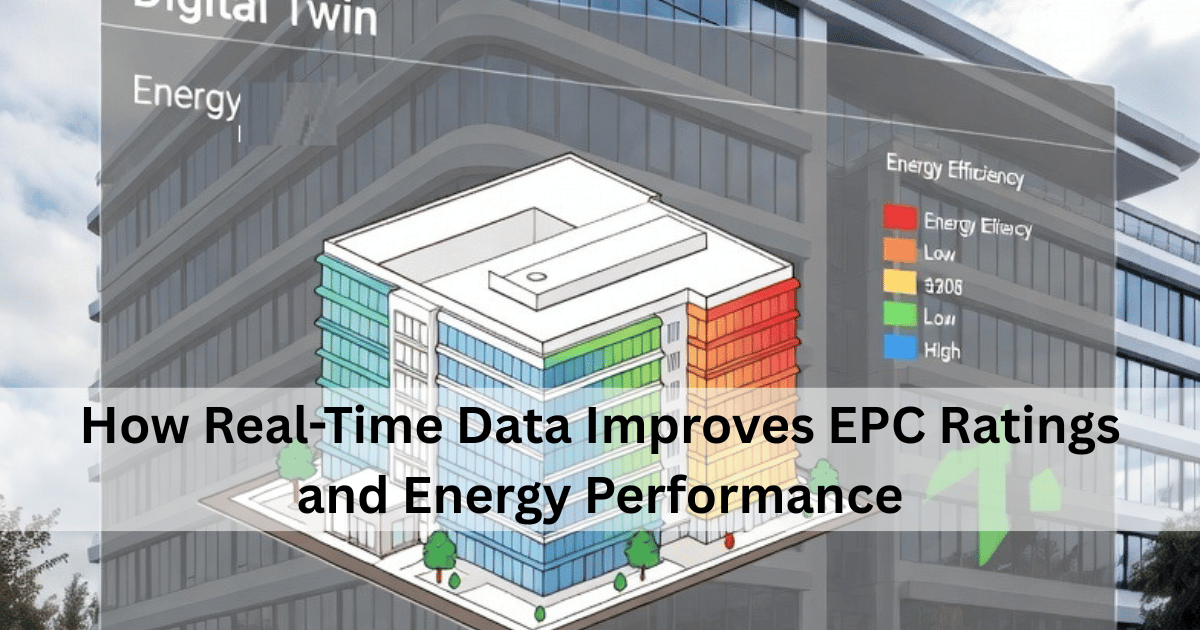
Energy performance is no longer just a sustainability metric—it is a regulatory requirement and a commercial priority.
With stricter enforcement of EPC (Energy Performance Certificate) standards and growing pressure from ESG frameworks, building owners must demonstrate measurable improvements in energy efficiency. Yet many organisations still rely on static assessments, outdated data, and manual processes, limiting their ability to improve performance.
...
Environmental, Social, and Governance (ESG) reporting has moved from a voluntary initiative to a regulatory and commercial requirement.
Across the UK and Europe, frameworks such as the EPBD and increasing investor scrutiny are requiring organisations to deliver:
Accurate energy performance data
Transparent carbon reporting
Real-time operational insights
Yet many organisations struggle—not because they lack systems, but because those system...
Smart buildings are no longer a future concept—they are becoming a regulatory, operational, and financial necessity.
With rising energy costs, tightening ESG requirements, and the increasing adoption of IoT and AI, organisations are under pressure to modernise building infrastructure. But while “smart building” is widely discussed, many still lack clarity on what the actual technology stack looks like in practice.
In 2026, a modern smart building is ...
As organisations scale CCTV systems, IoT sensors, and edge devices across multiple locations, one challenge consistently emerges: how to connect everything securely, reliably, and at scale.
While individual components—cameras, sensors, routers—are often straightforward to deploy, the underlying network architecture determines whether the entire system performs effectively or becomes a source of risk.
Poorly designed architectures lead to:
Securi...
Managing connectivity across multiple sites is increasingly complex. Whether supporting CCTV systems, routers, IoT devices, or edge infrastructure, businesses need secure, reliable, and remotely accessible networks—often in locations where fixed-line broadband is impractical or unavailable. This is where fixed IP mobile connectivity plays a critical role.
Deploying fixed IP connectivity across a multi-site estate requires more than simply installing SIM...
Choosing the right IP configuration is a critical—but often overlooked—part of building a reliable business network.
Whether you’re setting up secure remote access, hosting services, or improving network stability, understanding the difference between fixed (static) and dynamic IP addresses can have a significant impact on performance, security, and scalability.
In this guide, we break down static IP vs dynamic IP for UK businesses, explain the key d...